Austin Fixer Upper Homes for Sale: 2026 Buyer Guide
June 8, 2026 · 13 min read

TL;DR — The Bottom Line
Austin fixer upper homes for sale represent one of the most attainable entry points into a notoriously expensive metro. With 100+ active fixer listings in Austin proper and 780+ value-add properties across Travis and Williamson counties under $350K, buyers, investors, and developers have meaningful inventory to evaluate. Success hinges on accurate ARV math, neighborhood-level comp knowledge, and a strategic team — exactly where the Zell Team's five decades of Austin expertise creates an edge.
Austin's housing market has long been defined by tight inventory, premium pricing, and intense buyer competition. Yet beneath the headlines about median prices and bidding wars sits a quieter, opportunity-rich segment: Austin fixer upper homes for sale. For first-time buyers priced out of move-in-ready listings, for investors hunting margin, and for developers eyeing infill plays, fixer-uppers are increasingly the most viable path into the metro's best ZIP codes.
This guide walks through current inventory, pricing dynamics, neighborhood patterns, financing strategies, and the due-diligence framework that separates a profitable project from a money pit. Whether you're a homeowner willing to roll up your sleeves or an investor building a flip pipeline, the data below will sharpen how you evaluate Austin fixer upper homes for sale in 2025.
Quick Facts
- Active Austin fixer listings (Realtor.com): ~100 homes
- Travis County fixers under $150K: 500+ results
- Travis + Williamson under $350K: ~780 value-add homes
- Primary buyer types: Owner-occupants, flippers, BRRRR investors, infill developers
- Strongest competition: Properties where rehab math "pencils" cleanly
- Zell Team Austin experience: Over five decades
Why Austin Fixer Upper Homes for Sale Are Drawing Strong Demand
The fundamental driver is simple math. Austin's median sale price still sits well above national averages, and turnkey homes in desirable neighborhoods routinely trade at a premium. Fixer-uppers, by contrast, list at a discount that reflects the cost — and the risk — of renovation. For a buyer willing to accept that trade-off, the discount is the door.
Three macro forces are amplifying interest in Austin fixer upper homes for sale right now:
- Inventory constraints in turnkey segments: While overall Austin inventory has loosened compared to 2021–2022 peaks, well-renovated homes in core neighborhoods still move quickly. Fixers sit longer, giving buyers leverage.
- Renovation financing maturity: FHA 203(k), Fannie Mae HomeStyle, and conventional rehab loans have become more accessible, allowing owner-occupants to finance purchase and renovation in one mortgage.
- Investor appetite for value-add: With cap rates compressed on turnkey rentals, forced appreciation through rehab is one of the few remaining ways to manufacture equity in Austin.
The result: fixer-uppers are no longer a niche corner of the market. They're a mainstream strategy, and competition has intensified for the right properties.
Current Inventory Snapshot: Austin Fixer Upper Homes for Sale
Listing portals tell slightly different stories depending on how they tag condition, but the directional picture is consistent:
- Realtor.com shows roughly 100 fixer-upper homes in Austin proper.
- Trulia displays a narrower set — about 13 listings — reflecting stricter "fixer-upper" labeling.
- Travis County (Austin + suburbs) reveals hundreds of "needs work" or under-market homes, especially under $150K–$350K price caps.
- Travis + Williamson combined pushes total value-add inventory to roughly 780 properties under $350K.
The pattern is geographic as much as numeric. Core Austin holds scattered older homes in central, east, and south neighborhoods needing cosmetic or structural updates. Inner-ring suburbs — parts of North Austin, pockets of Round Rock and Pflugerville — feature 1970s–1990s stock with deferred maintenance. The outer reaches of Travis and Williamson counties contain the bulk of true entry-price project homes, including small single-family residences and manufactured housing.
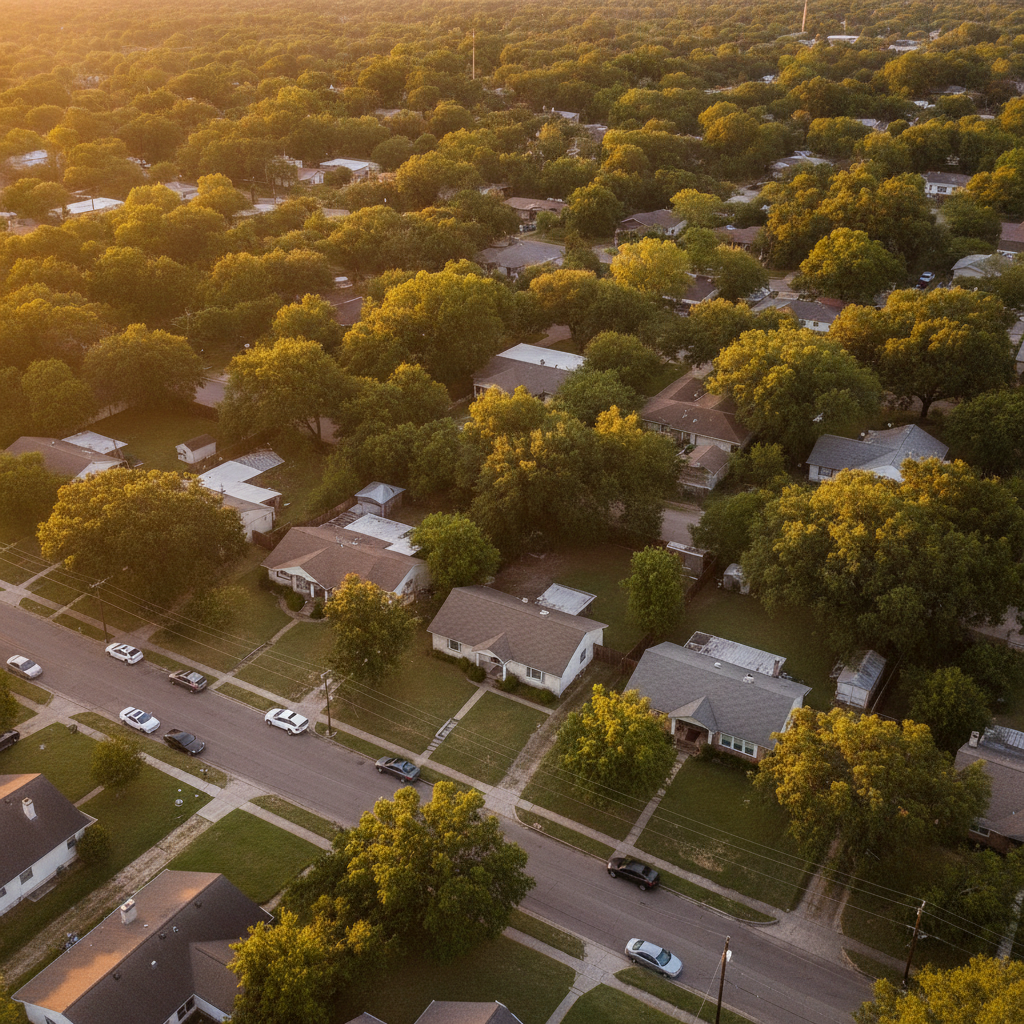
At any given moment, expect roughly 100 fixer-tagged listings inside Austin city limits and several hundred additional value-add homes across the broader Travis and Williamson county footprint, with the highest concentration of sub-$350K projects in outer suburbs.
Pricing Dynamics and Where the Value Lives
Pricing for Austin fixer upper homes for sale is best understood as relative rather than absolute. A 1,400 sq ft cottage in East Austin needing a kitchen, two bathrooms, and HVAC may still list at $475K — high in isolation, but a meaningful discount versus the renovated comp next door at $725K. That spread is the investable margin.
Three pricing realities shape the segment:
1. Central Austin: Premium Locations, Premium Projects
Even "distressed" homes in 78704, 78702, and 78751 rarely list cheap. The opportunity here is appreciation leverage — buying the worst house on a great street, then renovating to match the neighborhood ceiling.
2. Inner-Ring Suburbs: The Sweet Spot for Many Buyers
Pflugerville, Round Rock, Manor, and Kyle offer the largest selection of 3-bed, 2-bath fixers in the $250K–$400K range. Rehab budgets tend to be more predictable here because the homes are newer and structurally simpler.
3. Outer Travis & Williamson: Entry-Price Inventory
This is where sub-$150K projects live. Many are manufactured homes, small SFHs on larger lots, or properties with significant structural concerns. Returns can be strong, but so is the operational complexity.
Who's Buying Austin Fixer Upper Homes for Sale
The buyer pool for Austin fixer upper homes for sale falls into three broad camps, each with different goals and constraints.
Owner-Occupant Homeowners
First-time and move-up buyers increasingly accept moderate rehab as the cost of entry to preferred school zones or central neighborhoods. Many leverage FHA 203(k) or HomeStyle Renovation loans to wrap purchase and renovation into one mortgage. Phased improvements — kitchen first, baths next, exterior later — make the financial load manageable.
Investors (Flippers and BRRRR Operators)
Small to mid-size investors target rent-ready rehabs or 60–90 day flip candidates. They concentrate in Pflugerville, Round Rock, Manor, Kyle, and select East and Southeast Austin pockets where ARV-to-rehab spreads support 15–20% net margins after holding and selling costs.
Developers and Builders
In zones supporting additional density, an older SFH on a generous lot can be highest-and-best-use as a teardown or major reconfiguration. Recent Austin land-use reforms have expanded the geography where this math works.
For a deeper look at how each buyer profile should approach the market, explore the Zell Team buyer resources.
How to Evaluate Austin Fixer Upper Homes for Sale: A Step-by-Step Framework
Whether you're an owner-occupant or an investor, the analytical framework for evaluating Austin fixer upper homes for sale is essentially the same. The differences lie in tolerance for risk and timeline.
- Establish neighborhood ARV. Pull three to five recent sales of fully renovated comparable homes within a half-mile and adjust for square footage, beds, baths, and lot.
- Get a contractor walk-through. Before submitting an offer, have a licensed contractor estimate rehab cost. For first-timers, add a 15–20% contingency.
- Run the all-in number. Purchase + rehab + holding (taxes, insurance, utilities, interest) + selling (6% commission, title, concessions) = total cost.
- Compare to ARV. Investors typically want at least 20–25% spread. Owner-occupants need enough cushion to avoid being underwater if values dip.
- Inspect thoroughly. Foundation, roof, HVAC, electrical, plumbing, and sewer line are the five expensive surprises. Pay for specialists, not just a general inspection.
- Verify zoning and permitting. Especially for additions, ADUs, or teardowns. Austin's regulatory landscape has shifted, and assumptions can be costly.
- Lock financing early. Rehab loans take longer than conventional mortgages. Get pre-approved before you fall in love with a property.
Underestimating rehab cost and timeline. The discount on the front end gets erased by surprise foundation work, scope creep, or carrying a vacant property for six months instead of three. Conservative budgeting and contractor vetting protect the entire deal.
Financing Austin Fixer Upper Homes for Sale
Financing is where many fixer-upper plans stall, so it deserves dedicated attention. The right loan product depends entirely on whether you'll live in the home and how extensive the work is.
FHA 203(k) Renovation Loan
For owner-occupants. Combines purchase and renovation into one loan, with as little as 3.5% down. Comes in Standard (structural work allowed) and Limited (cosmetic, capped at $35,000) varieties. Slower closings — expect 45–60 days.
Fannie Mae HomeStyle Renovation
Conventional alternative to 203(k), allowing up to 75% of ARV in loan amount. Stricter credit standards but more flexibility on luxury upgrades and investment properties.
Hard Money and Private Lending
Investor-focused. Higher rates (10–13%) and short terms (6–18 months), but faster closings and lighter documentation. Ideal for flips where speed matters more than rate.
Cash and Delayed Financing
Cash buyers win on speed and seller confidence, then refinance into a conventional mortgage post-rehab using delayed financing rules. Common BRRRR exit strategy.
For Austin-specific lender recommendations and pre-approval guidance, the Zell Team can connect you with renovation-friendly lenders who close on time.
Neighborhood Spotlight: Where Austin Fixer Upper Homes for Sale Cluster
| Area | Typical Fixer Profile | Approx. Price Band | Best For |
|---|---|---|---|
| East Austin (78702, 78721) | 1940s–1960s bungalows, lot value plays | $425K–$650K | Flippers, infill developers |
| South Austin (78704, 78745) | Mid-century ranch, cosmetic to moderate | $475K–$725K | Owner-occupants, premium flips |
| North Austin / Pflugerville | 1980s–1990s suburban SFH | $275K–$425K | First-time buyers, BRRRR |
| Round Rock / Hutto | Newer suburban with deferred maintenance | $300K–$450K | Light-rehab investors |
| Manor / Elgin / Kyle | Entry-price SFH, rural-edge lots | $200K–$325K | Budget owner-occupants, rentals |
| Outer Travis County | Manufactured, small SFH on land | Under $200K | Cash investors, land bankers |
Each submarket carries its own renovation norms, buyer expectations, and resale ceiling. A kitchen package that's perfect for Pflugerville may underperform in 78704 — and vice versa. Local guidance matters more here than almost anywhere else in real estate.
Common Pitfalls When Buying Austin Fixer Upper Homes for Sale
Even seasoned investors stumble. The most frequent issues we see across Austin fixer upper homes for sale fall into a handful of categories:
- Overpaying for location bias. Falling in love with a ZIP code can lead to thin margins.
- Ignoring foundation issues. Central Texas clay soil is unforgiving. A pier-and-beam fix can run $10K–$40K.
- Scope creep. "While we're at it" decisions inflate budgets by 20–30% and extend timelines.
- Wrong finish level. Quartz and custom cabinetry in a $275K Pflugerville flip won't return their cost.
- Underestimating permitting. Austin permit timelines have improved but can still delay structural work by weeks.
- Skipping the sewer scope. A $150 sewer-line camera inspection has saved countless buyers from $8,000 surprises.
"The best Austin fixer-upper isn't the cheapest house on the block — it's the one where the rehab math, the location, and the exit strategy all line up."
How the Zell Team Helps Buyers Navigate Austin Fixer Upper Homes for Sale
With over five decades of Austin real estate experience and the institutional backing of Compass, the Zell Team approaches fixer-uppers as a specialized practice area rather than a generic listing category. That matters because fixer transactions require fluency in three disciplines simultaneously: hyperlocal comp analysis, renovation cost modeling, and as-is negotiation strategy.
What buyers and investors gain working with the Zell Team on Austin fixer upper homes for sale:
- Neighborhood-by-neighborhood ARV modeling grounded in five decades of pattern recognition
- Contractor and inspector network built through years of vetted referrals
- Renovation lender introductions for FHA 203(k), HomeStyle, and hard-money products
- Off-market and pre-market access to estate sales, investor specials, and as-is listings
- Exit strategy guidance for both flip resale and long-term rental positioning
To explore current listings or schedule a strategy call, visit the Zell Team homepage.
Frequently Asked Questions
How do I find Austin fixer upper homes for sale that aren't on the MLS?
Off-market opportunities surface through estate attorneys, wholesalers, neighborhood door-knocking campaigns, and agent networks. Working with an experienced local team like the Zell Team gives you access to pre-market and pocket listings that never hit public portals — often the best margins in the segment.
What's the average renovation cost for Austin fixer upper homes for sale?
Costs vary widely by scope, but typical ranges in 2025 are: $25–$45 per sq ft for cosmetic refresh (paint, flooring, fixtures), $60–$100 per sq ft for kitchen-and-bath remodels with light systems work, and $125–$200+ per sq ft for full gut renovations including structural, electrical, and plumbing. Always budget a 15–20% contingency.
Can I use an FHA loan to buy a fixer-upper in Austin?
Yes. The FHA 203(k) Renovation Loan is designed exactly for this scenario, allowing you to finance both purchase and rehabilitation with as little as 3.5% down. It's a popular path for owner-occupants buying Austin fixer upper homes for sale who don't have cash reserves for a separate renovation budget.
Are Austin fixer upper homes for sale a good investment in 2025?
For investors who underwrite conservatively and pick the right submarkets, yes. Margins are tighter than in 2019–2021, but value-add remains one of the few ways to manufacture equity in Austin. Success depends on accurate rehab budgeting, neighborhood-appropriate finishes, and disciplined exit planning — not on banking on rapid appreciation.
How long does it take to renovate a typical Austin fixer-upper?
Light cosmetic projects run 4–8 weeks. Moderate renovations with kitchen and bath work typically take 3–5 months. Full gut renovations involving permits, structural changes, or additions can stretch 6–12 months. Permit timelines in Austin remain a key variable to budget around.
Final Thoughts and Next Steps
Austin fixer upper homes for sale remain one of the most strategic plays in an otherwise demanding market. They reward preparation, punish improvisation, and reliably create equity for buyers who do the work — both literally and analytically. With roughly 100 fixer listings inside Austin city limits and hundreds more across the surrounding counties, the inventory is there. What separates a profitable purchase from a costly lesson is the discipline you bring to comp analysis, rehab budgeting, financing strategy, and exit planning.
Whether you're a first-time buyer hunting your way into a great school district, an investor building a flip pipeline, or a developer evaluating teardown candidates, the right partner makes the difference. The Zell Team's five decades of Austin expertise, combined with Compass-backed resources and a deep contractor and lender network, position our clients to evaluate Austin fixer upper homes for sale with the rigor the segment demands.
Ready to start your search? Contact the Zell Team today for a no-pressure conversation about your goals, current inventory, and the strategy that fits your timeline and budget. The right fixer-upper is out there — let's find it together.